 By admin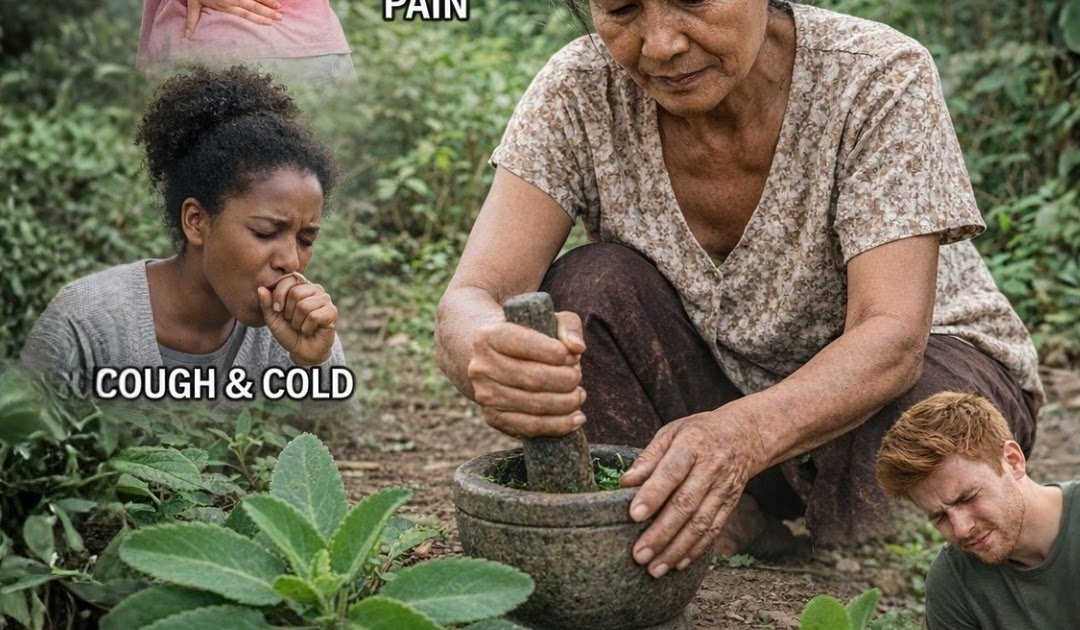
You open your phone and there it is: a photo of a thick, green, fleshy leaf that looks like it stores water.
Someone comments, “Drink its juice and your cough goes away… even pain too.”
Your mind lights up: Is that true? Is it safe? Or is it just another grandma’s tale?
It smells like a backyard, a damp flowerpot, a Sunday home remedy. And that’s exactly the hook: “natural” feels safe—even when it isn’t always.
Stay with me, because today you’ll understand what Bryophyllum pinnatum (also known as Kalanchoe, “miracle leaf,” or sống đời) really is, why people use it, and how to think about it with common sense and caution.

Why These Remedies Go Viral (and Why That Matters)
When you’re hoarse, have a mild cough, or a stubborn cold that won’t let go, you want quick relief.
If your back also aches from stress or you feel generally sore, your body looks for shortcuts.
That’s where word-of-mouth remedies appear: a leaf, a tea, a juice.
The promise is tempting: cheap, accessible, “used forever.”
But here’s the detail almost nobody says out loud:
In health, “popular” does not always mean “safe for everyone.”
One person may feel better because of hydration, rest, or the placebo effect. Another may get worse because of interactions, side effects, or because they delay a real diagnosis.
Have you ever noticed something helps for a while… and then the problem comes back stronger?
Today we’re not here to demonize the plant or sell you magic. We’re here to give you a map:
-
What it might support
-
What it cannot replace
-
And when it’s time to stop experimenting and seek help
Because the most valuable thing is not the leaf. It’s your judgment.
What Is Kalanchoe and What People Say It “Supports”
Bryophyllum pinnatum (Kalanchoe) is a succulent plant.
Its leaves hold water, and when you break them, they release a clear, slightly bitter juice.
In some households, it’s used as a support for minor issues:
-
Mild cough
-
Light cold symptoms
-
Throat irritation
-
General tiredness
-
Tension-related aches
How is it traditionally used?
People usually wash a few leaves, crush them to extract the juice, or prepare a very light infusion. The popular idea is to “soothe” and “calm inflammation.”
But here’s the key point:
Just because something is used at home does not make it a medicine.
And it definitely does not mean it’s for serious problems like persistent headaches, strong back pain, kidney pain, or ongoing symptoms.
A mild discomfort is one thing. A warning sign is another.
So, does it “work” or not?
The most responsible answer is:
It may feel helpful as a support for mild symptoms for some people, but it does not replace medical evaluation, and it’s not for everyone.
That brings us to the most useful part: the possible benefits when used with common sense—and the limits you should respect.
9 Potential Benefits of Using It Carefully (and the Last One Changes How You Decide)
9) It forces you to slow down and listen to your body
“Maria,” 59 (fictional name), used to live in a rush. When she caught a cold, she kept working like nothing happened.
One day, a neighbor gave her Kalanchoe leaves and showed her how to prepare them.
While washing the leaf and hearing the water run, she finally allowed herself to stop. That pause, plus a warm drink, gave her subjective relief.
It wasn’t just the leaf. It was the pause.
What if your first “remedy” were actually real rest?
8) It can support hydration when taken as a light infusion
When you have a mild cough or throat irritation, your throat often just needs warm fluids.
Maria noticed less scratchiness after drinking something warm and breathing in the steam.
Sometimes, what soothes is the moisture, not a “secret ingredient.”
If it helps you drink more fluids, that’s already a plus.
The key question is: Are you using it as support, or as a substitute for needed treatment?
7) It can create a feeling of relief through ritual and temperature
There’s something powerful about sensory care: warmth in your throat, a mild herbal smell, the act of taking care of yourself.
“Raúl,” 63 (fictional name), used to say: “It calms me because I feel like I’m doing something.”
That feeling can reduce anxiety—and anxiety often makes discomfort feel worse.
Important: Feeling better does not prove something cures disease.
But comfort matters—as long as it’s safe.
6) It may help you avoid overusing unnecessary syrups or pills
Some people, out of desperation, combine everything: syrups, cold meds, painkillers, anti-inflammatories.
Sometimes, the body only needed rest, fluids, and time.
If a simple home ritual keeps you from overusing medications, that can be helpful.
The hidden risk? Using it to ignore red flags like high fever, shortness of breath, or a cough that won’t go away.
The line between “support” and “danger” is time and intensity.
5) It may accompany mild throat discomfort in simple colds
In a common cold, a sore throat often improves with simple measures.
Raúl prepared a very light, warm infusion and said it “smoothed” the rough feeling when swallowing.
This can happen because of warmth and hydration.
It’s not a promise. It’s a possibility.
The smart move is to observe:
Does it improve in a few days—or does it get worse?
If it gets worse, change the plan.
4) It trains you to monitor early signals instead of guessing
Maria started tracking: temperature, cough duration, mucus color, energy levels.
That made her smarter about her health.
If symptoms were mild and improving, she stayed with simple care.
If fever or extreme fatigue appeared, she booked an appointment.
This habit is more valuable than any leaf. It gives you real control.
Do you know how long you’ve had that cough?
Most people don’t—and that’s where problems begin.
3) It can help you feel you breathe easier through warm steam
Steam from a warm drink can give the sensation of more “open” airways.
Raúl said that gently inhaling made him feel less congested.
It does not cure infections and does not replace medical care.
But if a symptom eases, you often sleep better.
And better sleep supports recovery.
Important: If there’s real breathing difficulty, wheezing, or chest pain, this is no longer home-remedy territory.
2) It reminds you of the power of moderation
Here’s what few people talk about: “Natural” can still have effects.
Some plants contain active compounds that are not suitable during pregnancy, breastfeeding, or with certain medications.
That’s why small amounts, occasional use, and careful observation are smarter than “taking it every day just because.”
Raúl once took more than usual and felt uncomfortable.
He learned that with herbs, less is often more.
Is moderation your main ingredient?
1) The life-changing benefit: It teaches you when to stop and ask for help
The real change is not the leaf.
It’s your decision not to self-medicate with blind faith.
Maria learned to recognize non-negotiable signs:
-
High fever
-
Cough lasting weeks
-
Strong side or lower back pain
-
Burning when urinating or blood in urine
-
Intense or unusual headaches
-
Dizziness or visual changes
At that point, no tea is enough. You need a check-up.
This habit can prevent complications caused by waiting too long.
The most “healing” skill is deciding in time.
How to Think About Using It Prudently (If You Choose to Try)
If you decide to use it as support for mild symptoms, keep the right mindset:
It’s a complement, not a treatment.
General safety-first ideas:
-
Wash the leaves well with clean water.
-
Avoid mixing it with many other herbs or supplements at the same time.
-
If you take it, use small amounts and observe your response.
-
Prioritize rest, hydration, and fresh air.
-
If you’re pregnant, breastfeeding, have chronic conditions, or take medication, don’t experiment without professional advice.
“But my family has used it forever.”
That’s common. But your body, your medications, and your medical history are not your grandmother’s.
That’s not disrespect. That’s responsible health care.
Traditional Use vs. Responsible Approach
| Element | What People Often Do | A More Careful Approach | Why It Matters |
|---|---|---|---|
| Fresh leaves | Crush and drink the juice | Use occasionally and in small amounts | Avoids excess and irritation |
| Light infusion | “Like a tea” | Keep it mild, not concentrated | Reduces risk of discomfort |
| Reason for use | “For everything” | Only mild symptoms, short time | Prevents delayed diagnosis |
| Expectations | “It cures” | “It may support, not cure” | Protects you from false promises |
Warning Signs: When NOT to Continue Home Remedies
This is the most important part of the article.
The biggest risk is not the plant. It’s waiting too long.
Seek medical care if you have:
-
High fever or fever that doesn’t go down
-
Cough lasting weeks or with shortness of breath
-
Strong pain in the side, lower back, or “kidney area”
-
Burning when urinating, blood in urine, or colicky pain
-
Intense, persistent headaches or neurological symptoms
-
Pain that wakes you at night or gets worse quickly
Safety Guide at a Glance
| Situation | What to Do | Why It Matters |
|---|---|---|
| Mild cold (1–3 days) | Fluids, rest, observe | Most improve with simple care |
| Mild cough, no fever | Light infusion + hydration + rest | May soothe irritation |
| Pregnancy / breastfeeding | Avoid without professional advice | Higher sensitivity and risks |
| Chronic illness or medications | Don’t experiment | Possible interactions |
| Intense or persistent symptoms | See a doctor | May need real treatment |
Final Thoughts: Your Health Is Not a Gamble
A home remedy can be a pleasant support when symptoms are mild and you’re paying attention.
But when signs are strong, the smart move is to get a diagnosis.
Not because you’re weak.
Because you’re smart.
Take these three ideas with you:
-
Kalanchoe may feel helpful as a supportive ritual, not a miracle medicine.
-
Moderation and observation matter more than any trend.
-
Warning signs are your real protection.
Share this with someone who keeps leaves in the fridge “just in case.”
And ask yourself: what’s harder for you—stopping to rest, or asking for help in time?
This article is for informational purposes only and does not replace professional medical advice. Always consult a qualified healthcare provider for personalized guidance.