 By admin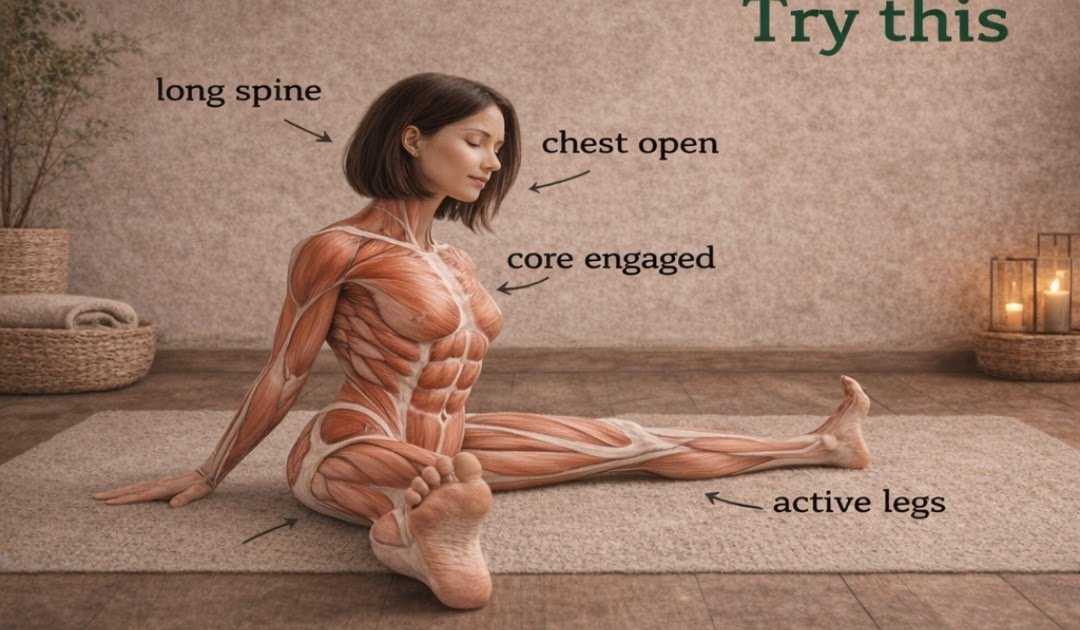
Proper posture is not about looking confident.
It’s not about “standing straight” for appearance.
It’s about biology, mechanics, and survival.
Your posture directly affects how you breathe, how your organs function, how your muscles work, and how much stress your nervous system carries. A collapsed, rounded posture doesn’t just look tired – it creates fatigue, pain, and internal pressure.
On the other hand, a well-aligned spine with an active core and grounded legs turns even simple sitting into a form of protection and strength training.
The difference is not small.
It is massive.

Why Poor Posture Blocks Your Body’s Natural Strength
When you sit slouched or collapsed:
-
The spine loses its natural curves
-
Muscles “switch off” and bones take the load
-
The diaphragm can’t move properly → shallow breathing
-
Internal organs get compressed
-
The brain receives signals of stress and fatigue
In simple terms:
your body works against you.
Even if you think you are “relaxing,” your nervous system experiences it as pressure.
That’s why many people feel more tired after sitting than after moving.
Alignment Is Power, Not Tension
Good posture does not mean stiffness.
It does not mean forcing yourself upright.
It means active balance.
When you sit or stand in proper alignment:
-
The spine is supported by muscles, not nerves
-
The core activates naturally
-
The legs become a stable base, not dead weight
-
Breathing deepens automatically
-
The body enters a state of stability and safety
This is not effort.
This is intelligent positioning.
Your Spine Is Designed for Alignment – Not Collapse
The spine is built for:
-
movement
-
load distribution
-
shock absorption
-
upright positioning
It is not built for sinking, folding, or hanging.
When you let your spine collapse:
-
Discs compress unevenly
-
Micro-inflammations appear
-
The neck overcompensates → pain, stiffness, headaches
-
Nerves get irritated
Bad posture rarely hurts immediately.
It hurts silently… and then permanently.
The Active Core: The Stability System Most People Ignore
The core is not just abs.
It is a 360-degree stability system that includes:
-
abdominal muscles
-
lower back muscles
-
pelvic floor
-
diaphragm
When you sit correctly, the core activates gently but continuously – like low-intensity training.
This leads to:
-
less pressure on the lower back
-
better balance
-
more endurance during the day
-
improved spinal protection
You don’t need to “flex.”
You need to activate.
Your Legs Are Not Decorative
In proper sitting posture, the legs work.
They:
-
press into the ground
-
share the load
-
support the pelvis
-
stabilize the spine
When legs are loose, crossed, or “thrown forward,” all the weight travels upward into the lower back.
And the lower back always pays the price.
Grounded legs = protected spine.
Alignment Instead of Strain
Your body does not want pressure.
It wants organization.
Good posture:
-
does not exhaust you
-
does not create tension
-
does not cause pain
If you feel pain when you “sit straight,” you are not aligned – you are forcing.
Alignment feels light, supported, and stable.
What Modern Science Says (2024–2025)
Recent studies show that correct sitting and standing alignment:
-
reduces muscle fatigue by up to 30%
-
improves breathing efficiency and oxygen delivery
-
lowers nervous system stress responses
-
supports better spinal load distribution
Posture is not cosmetic.
It is a neurological tool.
Your body posture sends constant signals to your brain about safety, effort, and stress.
Change the posture → change the signal.
How to Sit Properly (Without Constantly Thinking About It)
The secret is not to correct yourself every minute.
It’s to set up correctly from the start.
Focus on:
-
Spine upright, not rigid
-
Pelvis in neutral position
-
Core lightly active
-
Feet grounded on the floor
-
Shoulders relaxed, not pulled back
When you do this right, the body naturally “locks in” without effort.
No tension.
No struggle.
No constant reminders.
Why Posture Changes Everything
Your posture affects:
-
your breathing
-
your energy levels
-
your pain patterns
-
your strength
-
your endurance
-
your nervous system
This is not exaggeration.
This is physiology.
When you collapse, your system weakens.
When you align, your system strengthens.
Stop Choosing Collapse. Choose Intelligence.
Slouching feels easy.
Alignment feels powerful.
One leads to:
-
fatigue
-
pain
-
stiffness
-
degeneration
The other leads to:
-
stability
-
strength
-
efficiency
-
protection
Your body already knows what to do.
You just have to give it the right position.
Final Thought
Posture is not about discipline.
It is about respecting your structure.
When you align, you don’t just sit better.
You function better.
Your spine breathes.
Your muscles support.
Your nervous system relaxes.
Your body works with you – not against you.
Disclaimer: This article is for informational purposes only and does not replace medical advice. Always consult a qualified healthcare professional before making changes to posture, exercise, or treatment plans.